The Greek Gods knew that the Pelion was special home and birthplace of the half man half horse centaurs, though of fearsome reputation they had a deep knowledge of plants and herbal healing
it was a centaur, Cherion, who was entrusted with educating heroes and demigods, almighty warriors such as Hercules, Achilles and Jason.
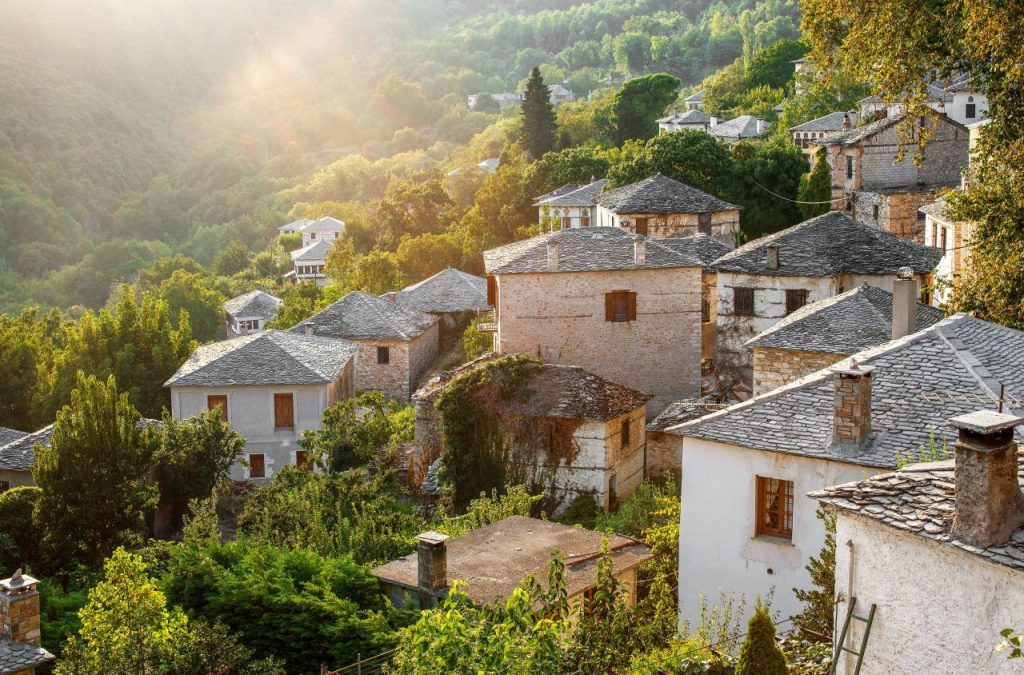
Legendary home of the centaurs, the mountains of the Pelion Peninsula are quite simply unique. Covered in forests of chestnut and beech, riven by deep gorges, and with very few settlements they might seem accessible only to intrepid explorers.
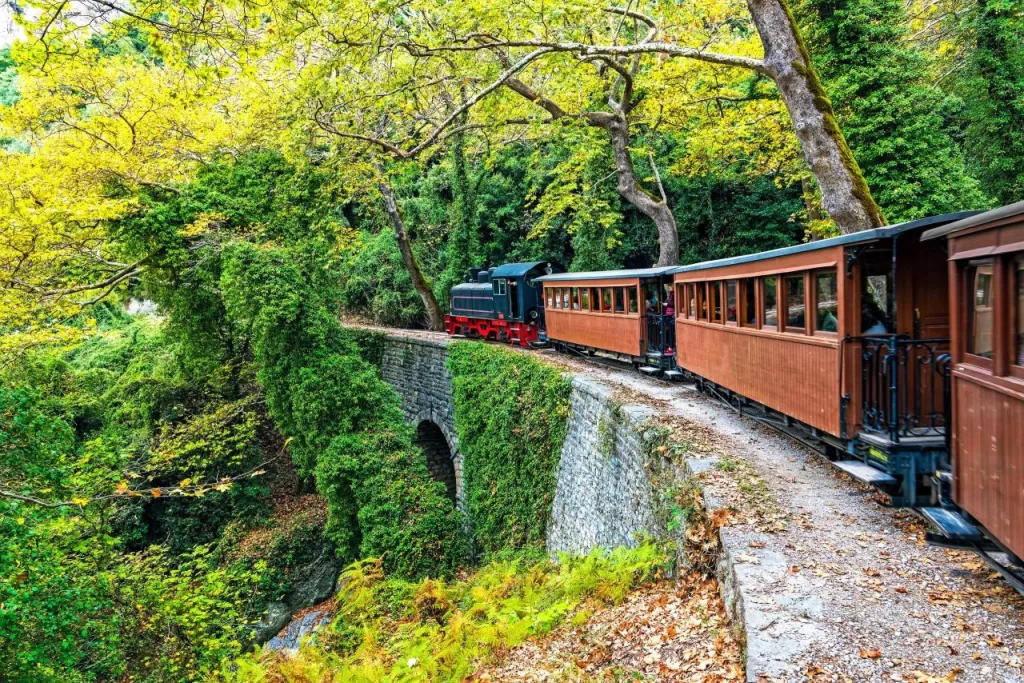
Appearances can be deceptive. Although few roads cross the central mountains, the high villages with their distinctive tall stone merchants’ houses are all connected to each other and down to the coast by a network of ancient trails known as ‘kalderimia’. One such village, Milies, is still connected to the coast by a narrow gauge railway designed by an Italian civil engineer, Evaristo de Chirico. The line crosses the many gorges via a series of graceful viaducts that formed a central feature of his son, Georgio’s, famous dream-like paintings. But there is far more to this fascinating area than wild forest and mountain.
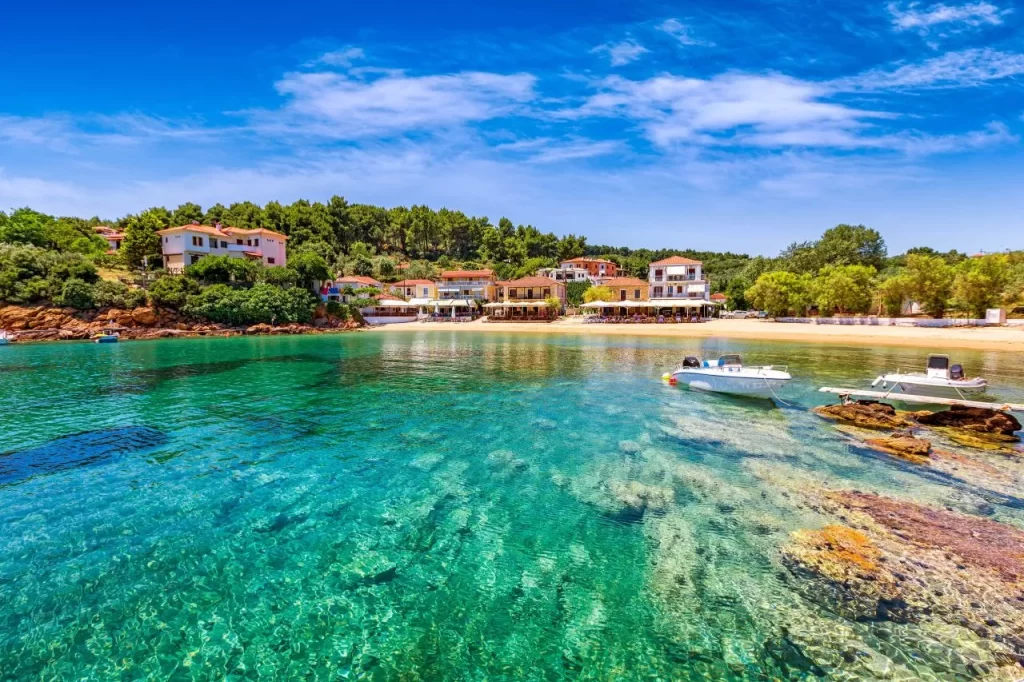
The claw-like Pelion Peninsula forms one arm of the almost landlocked Pagasitic Gulf. This gentler landscape with its scattered fishing villages, olive groves, vineyards and excellent beaches is more typically Greek than the mountains behind.
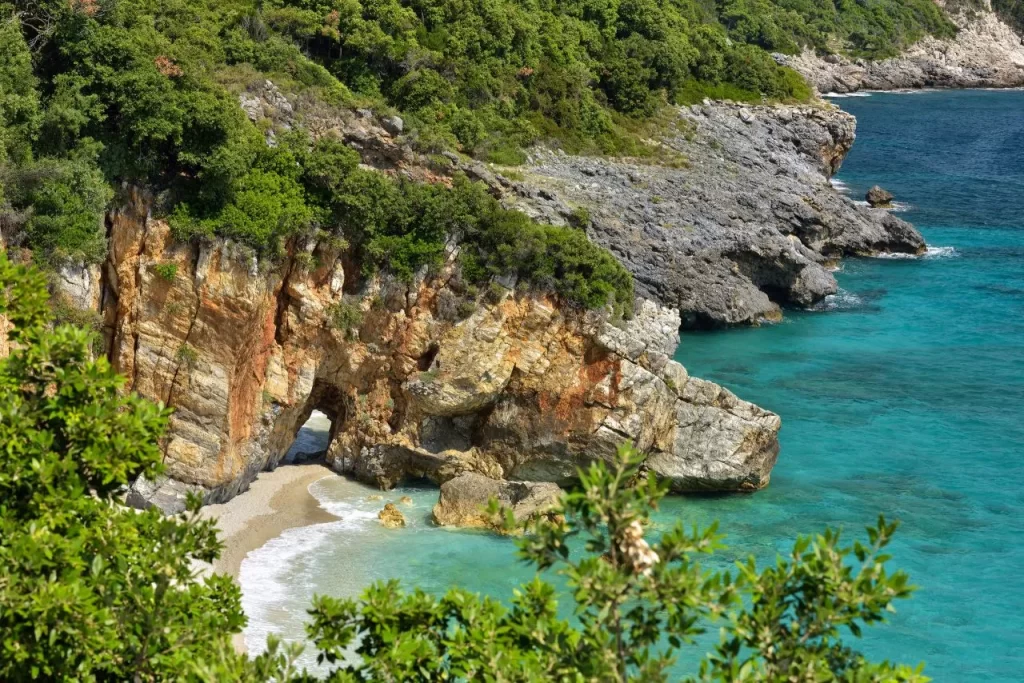
The Aegean coast of the peninsula is more spectacular. Here, steep streamfilled valleys and ravines end in tree-lined coves and rocky headlands, often with small villages such as Mylopotamos, perched on the steep hillsides. Every cove, inhabited or not, has it’s stretch of sand or shingle and most are connected by kalderimia that follow the coast.
Volos, one of the major cities and ferry ports of Greece, is the gateway into The Pelion from the vast plains of Thessaly. In recent years the city has been transformed, with new shopping precincts, an excellent museum and one of the largest open air markets in the region.
The Aegean coast of the peninsula is more spectacular. Here, steep streamfilled valleys and ravines end in tree-lined coves and rocky headlands, often with small villages such as Mylopotamos, perched on the steep hillsides. Every cove, inhabited or not, has it’s stretch of sand or shingle and most are connected by kalderimia that follow the coast.
Volos, one of the major cities and ferry ports of Greece, is the gateway into The Pelion from the vast plains of Thessaly. In recent years the city has been transformed, with new shopping precincts, an excellent museum and one of the largest open air markets in the region.
These days the chances of meeting a centaur on a mountain path might be somewhat remote, more likely a donkey, but the Pelion with its varied landscapes, fascinating history, unique architecture and beautiful coastline, is a wonderful and unspoilt holiday destination.
Here it is easy to see the connection between myth and historical fact. It only takes five minutes on one of the many ancient paths that still link the isolated communities of these majestic mountain forests, to recognise many of the herbs and plants, used medicinally by the ancients, as well as the centaurs, growing in profusion amongst the trees.
The Pelion Peninsula is unique, still largely unknown to foreign visitors, but long recognised by the Greeks as a national treasure to be appreciated and preserved. One can recognise the Pelion on the map as the long peninsula with a claw like promontory at its southern end that divides the Aegean Sea from the Pagasitic Gulf. Cut off in the north by the Pelion Massif, the only easy access by land is a narrow corridor from the great plain of Thessaly to the west at the head of the gulf through the city of Volos. The mountains, snow covered in winter (there is even a ski resort on the flanks of Mount Pelion), feed the many rivers and streams. The region is one of the most fertile and verdant in the eastern Mediterranean.
The Pelion is famous for its fruit, particularly apples. In the springtime when the blossom appears and the native chestnut, oak and beech trees are bursting into leaf, the colours and textures are simply breathtaking. In the full heat of summer the tree cover means that the temperature is at least five degrees less than out in the open. One of the great pleasures of a holiday here is to be able to enjoy lying in the sun on a beach with the clear Aegean waters lapping at your feet, before moving to relax in the cool shade of an ancient chestnut tree. September is apple picking time, the orchards are laden with fruit of every colour, whilst the cooler nights turn the forests above into a sea of russet and gold.
The inhabitants of the Pelion, despite a long tradition of independence from the ‘mainland’, are extremely hospitable and friendly. It is the only region in Greece that remained autonomous throughout the centuries of foreign intervention. Even the usually fearless Ottomans left these mountain villages well alone. Standing on the beach at Mylopotamos, the mouth of a narrow and precipitous ravine, one can easily understand how even the fiercest Turkish general would think twice about committing his warriors to an assault up the twisting steep and narrow trails!